How we used Clay to extract B2B contacts from B2C e-commerce traffic.
A step-by-step breakdown of how we turned 14,838 de-anonymized consumer website visitors into 1,038 verified B2B contacts ready for outbound campaigns.

14,838
Enriched Contacts
3,463
Qualified B2B
1,038
Verified Sending List
7%
Yield Rate
Our client runs a consumer e-commerce store with significant website traffic. The visitors are passionate about the products — they browse, compare, read reviews — but the vast majority leave without filling out a form or providing any contact information.
The challenge was unique: this consumer traffic contained a hidden B2B opportunity. Many of these visitors also held corporate roles where they had influence over purchasing decisions, events, or promotional budgets. If we could identify who they were and where they worked, we could open an entirely new outbound channel.
Here's how we did it.
Step 1: De-anonymize the traffic.
We installed Sigmail's traffic de-anonymization on the client's website. The technology identified 30,943 visitors out of 59,739 total users, a 52% identification rate.
Each identified visitor came back with enriched profile data: name, personal email, phone number, and where available, business email, employer name, job title, and LinkedIn profile.
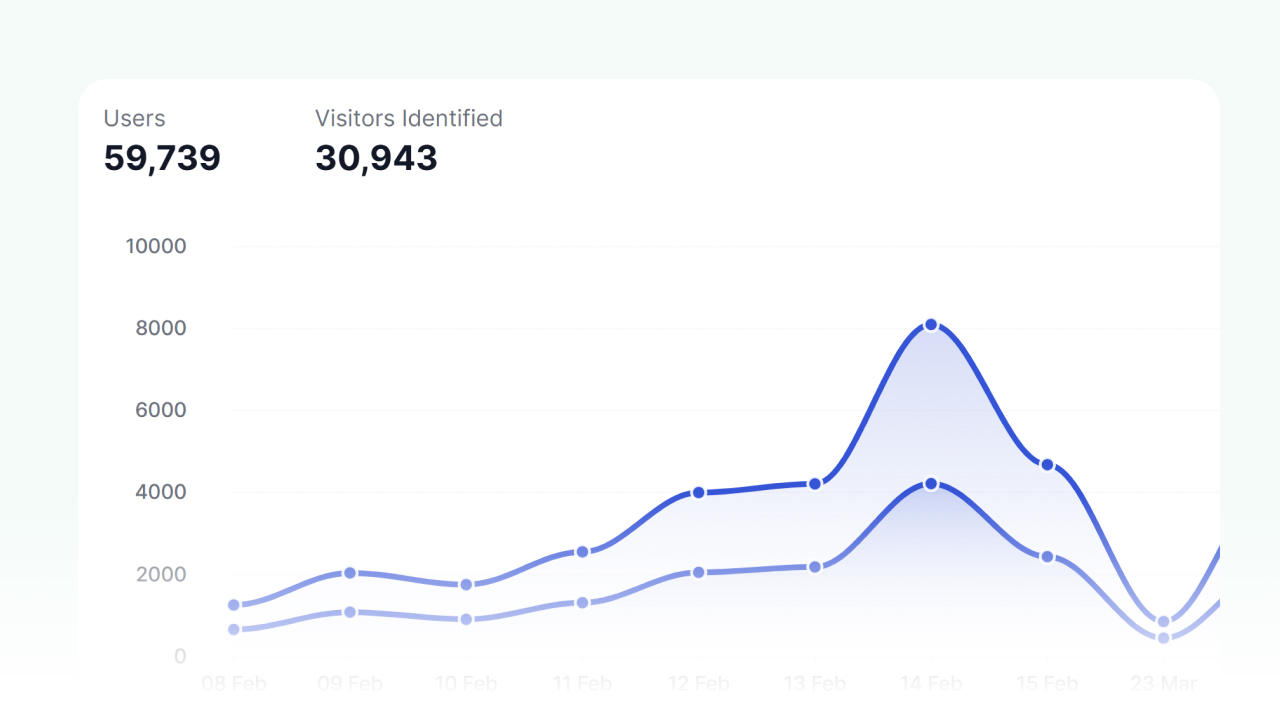
52% of website visitors identified with enriched profile data
From a recent export, 14,838 contacts had enough data to work with. The raw breakdown looked like this:
Raw de-anonymization data
14,838 enriched contacts from website visitors
| Data Point | Count | % of Total |
|---|---|---|
| Total Enriched Contacts | 14,838 | 100% |
| Business Emails Found | 2,629 | 17.7% |
| LinkedIn Profiles Found | 4,381 | 29.5% |
| Companies Found | 4,040 | 27.2% |
| Job Titles Found | 1,599 | 10.8% |
The data was rich, but not every contact was relevant. Most of these visitors were consumers. To find the B2B opportunity, we needed to filter.
Step 2: Filter for B2B relevance.
We applied two qualification filters. First, the contact needed at least one business identifier — a business email, LinkedIn profile, or company name. That brought us to 5,372 contacts.
Second, we applied a net worth threshold above $100K as a proxy for seniority and decision-making authority. This is a conservative filter — not strictly necessary for campaign performance, but it gave us a more targeted initial batch of contacts who are more likely to be in positions of authority.
Qualification filters applied
| Filter | Contacts | Notes |
|---|---|---|
| Has Business Email, LinkedIn, or Company | 5,372 | Baseline B2B qualification |
| Net Worth > $100K (excl. Unknown) | 3,463 | Proxy for seniority / decision-making authority |
The net worth filter is conservative. We can expand to the full 5,372 in a future wave if results justify it.
That left us with 3,463 qualified B2B contacts from what started as pure consumer e-commerce traffic.
Step 3: Validate and recover emails with Clay.
Of the 3,463 qualified contacts, 1,747 already had business emails from the de-anonymization data. But having an email doesn't mean it's deliverable. We ran every email through Clay's waterfall verification using Icypeas and ListMint to confirm deliverability.
Email verification results
1,747 business emails from de-anonymization run through waterfall verification
| Step | Count |
|---|---|
| Business Emails from De-anonymization | 1,747 |
| Icypeas Verified | 435 |
| ListMint Verified | 235 |
That gave us 670 verified emails from the original batch. But there were still over a thousand contacts with unverified or missing business emails who had LinkedIn profiles and personal emails. We weren't going to leave them behind.
For contacts whose business emails failed verification, we used Clay to look up their current company and latest email address. The recovery process worked in two stages:
First, we enriched contacts using their personal email addresses. Clay matched these to current employer records and pulled the latest business email. For contacts where that didn't yield results, we used their LinkedIn profiles to find current company information and recover a verified business email from there.
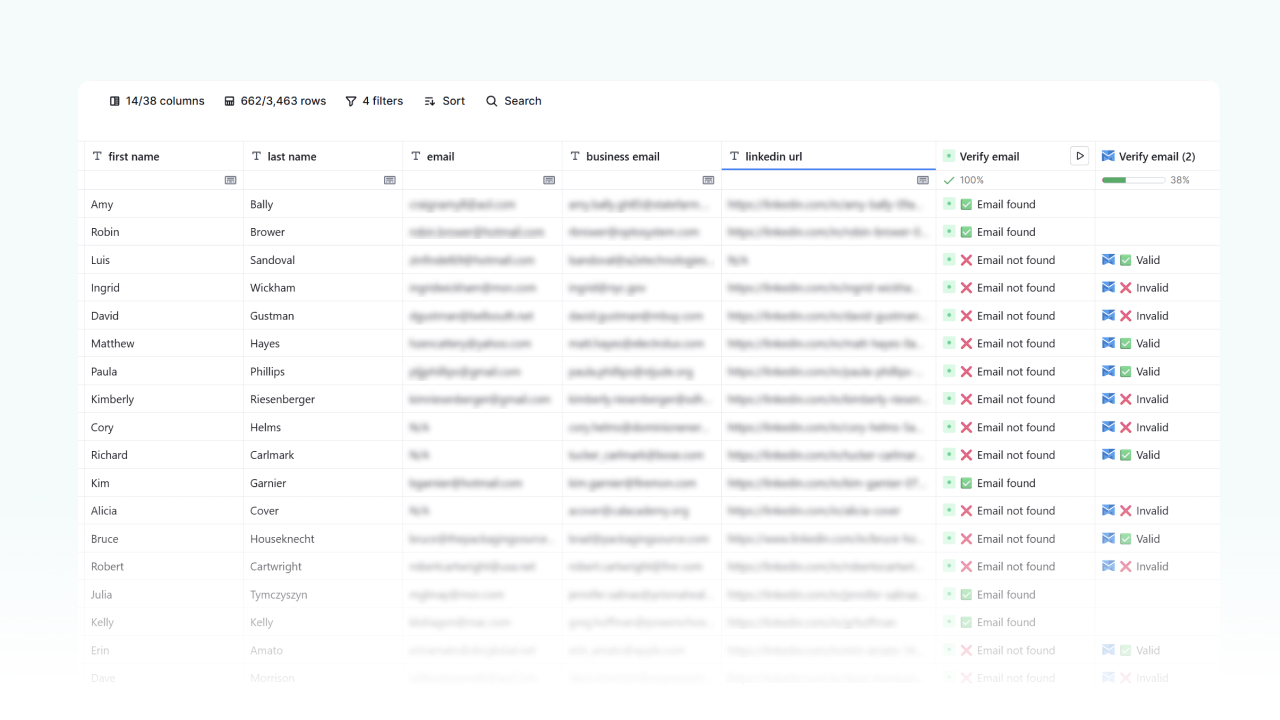
Clay's waterfall enrichment validating emails and recovering contacts via LinkedIn profiles
Email recovery via Clay
| Method | Contacts Processed | Emails Recovered |
|---|---|---|
| Enrich Person from Emails | 294 | — |
| Enrich Person from LinkedIn (unverified batch) | 808 | — |
| Total Verified Emails Recovered | — | 368 |
Step 4: Build the final sending list.
Combining the directly verified emails with the Clay-recovered emails, we had a final sending list of 1,038 verified contacts.
Final verified sending list
| Source | Count |
|---|---|
| Icypeas Verified | 435 |
| ListMint Verified | 235 |
| Clay Recovered (from unverified batch) | 368 |
| Total Verified Contacts | 1,038 |
The list was split into two campaigns based on whether we had a verified company name for the contact. This determined the email copy strategy — and created a natural A/B test.
Campaign split
| Campaign | Contacts | Email Copy Approach |
|---|---|---|
| With Company Name | 662 | Personalized copy referencing the contact's company |
| Without Company Name | 376 | Generic copy — also serves as an A/B test for whether company mention impacts response rates |
The split was driven by credit efficiency — enriching company names for the remaining 376 would have used additional Clay credits. However, this also creates a natural test we'll monitor.
The pipeline at a glance.
Starting from pure consumer e-commerce traffic, here's the full funnel:
59,739 website visitors → 14,838 enriched contacts → 5,372 with a business identifier → 3,463 after net worth filter → 1,038 verified and ready to send.
That's a 7% yield from raw de-anonymized traffic to a verified B2B sending list. Every contact on this list is someone who visited a consumer product website, showed genuine interest in the products, and has a verified business email tied to a company where they have professional relevance.
This isn't a list you could buy from any data provider. It only exists because we started with real website visitor behavior and worked backward to find the B2B opportunity hiding inside consumer traffic.
How Nethook leveraged this strategy to create a 33% click-to-open rate without impacting deliverability
See what happened when Nethook added Sigmail signatures to the outbound campaigns built from this enrichment pipeline. 1,005 signature clicks from 5,620 emails.
Read article
Ready to get started?
Create your first professional email signature in minutes. No credit card required.